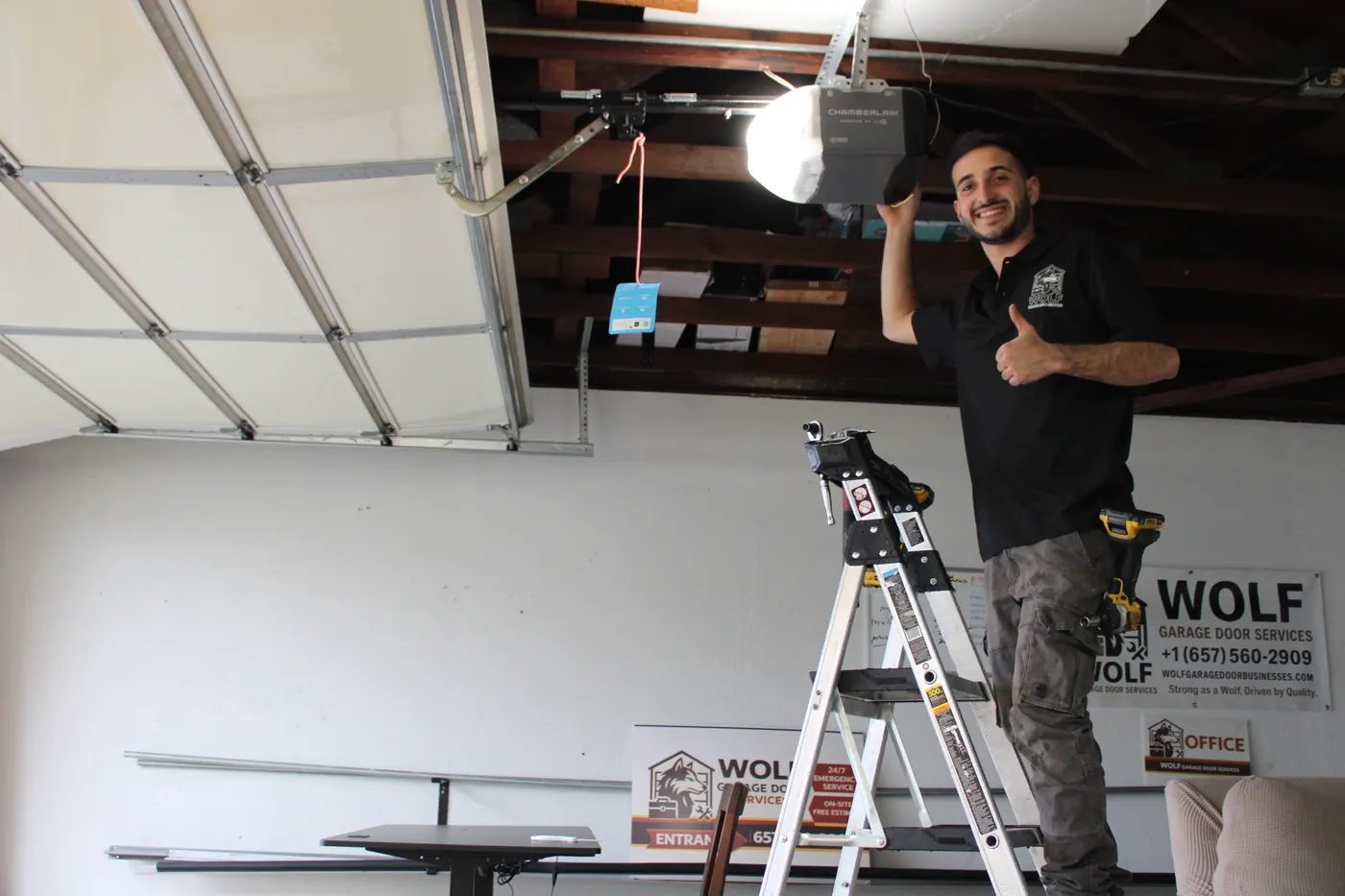
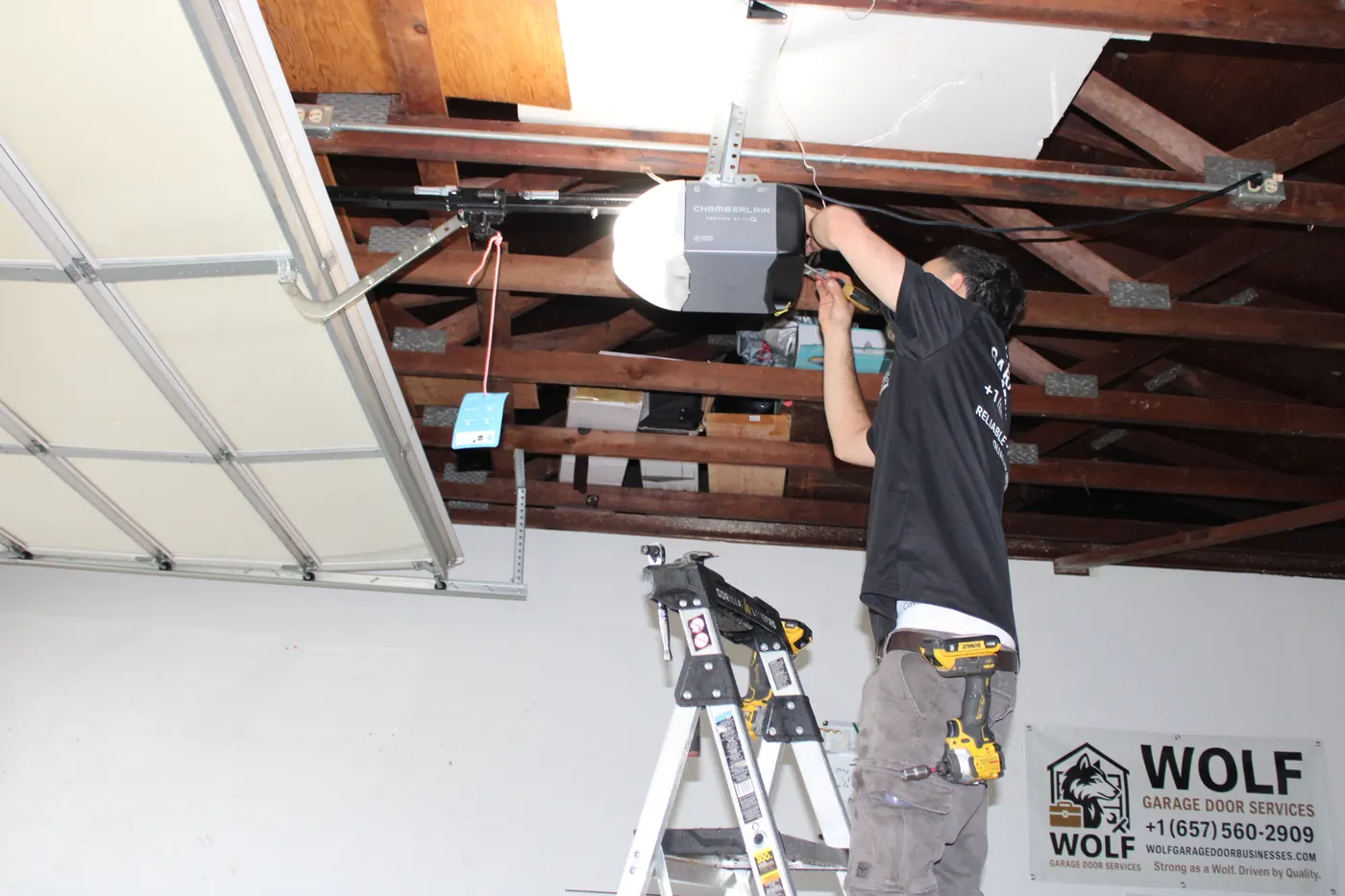
 Wolf Garage Door Services team
Three drive types cover nearly every home: chain drive, belt drive, and wall-mount (also called jackshaft). All three will lift a properly balanced door. They differ in sound, space and price.
One rule applies to every new installation in California, so we'll start there.
Battery backup is required in California
California SB 969 requires a battery backup on residential garage door openers installed since July 1, 2019. The law followed wildfires where people couldn't get cars out of garages during power outages.
A backup battery runs the opener for a limited number of cycles after the power drops. Batteries wear out over a few years, so test yours by unplugging the opener once in a while and running the door.
The three types compared
| Chain drive | Belt drive | Wall-mount (jackshaft) | |
|---|---|---|---|
| Noise | Loudest; metal-on-metal rattle | Quiet; rubber belt | Quietest; no rail overhead |
| Where it mounts | Ceiling, center of garage | Ceiling, center of garage | Wall beside the door, on the torsion shaft |
| Ceiling space | Needs a rail and motor overhead | Same as chain | Frees the ceiling entirely |
| Spring type needed | Any | Any | Torsion springs only |
| Upkeep | Chain tension and lube | Little | Little |
If someone sleeps over the garage
A bedroom or office above the garage changes the math. Chain drives transmit vibration through the ceiling joists, and an early-morning departure can wake the house.
- A belt drive cuts most of the rattle
- A wall-mount unit moves the motor off the ceiling altogether
- Fresh rollers and lubricated hinges matter too. A noisy door is often the hardware, not the opener
Tall ceilings, storage racks and car lifts
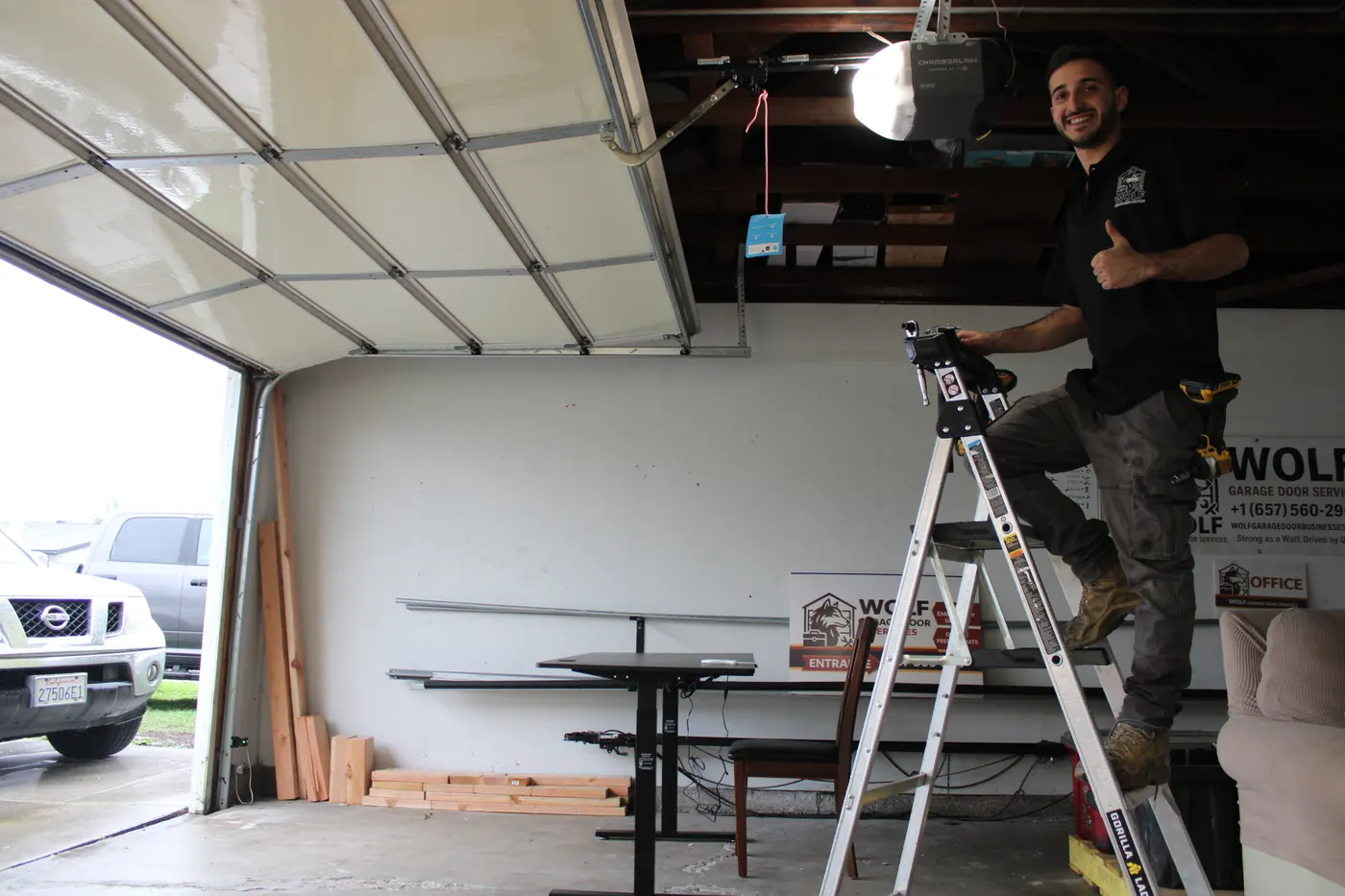
Ceiling-mounted openers need room for the rail and motor, which can block overhead storage racks or a car lift. A wall-mount opener solves that, but it only works on doors with torsion springs, and it needs a few inches of side room next to the shaft.
Smart features worth having
- Phone control and alerts: see whether you left the door open and close it from anywhere
- Delivery access: some brands work with package services to open the door briefly
- Auto-close timer: shuts the door after a set time; useful for forgetful households
- Keypad and remotes: rolling-code remotes are standard now; older fixed-code units are easy to copy
Most smart features rely on good Wi-Fi in the garage. Check the signal before paying for them. A garage with stucco walls and a metal door can block more signal than you'd expect, and a cheap range extender near the door often fixes a flaky connection.
Getting it installed
Before a new opener goes up, the door itself should be balanced. An opener won't fix a heavy door; it will only wear out faster pulling it. A tech checks the springs and tracks first, then recommends the opener. Visit our opener repair and installation page, or ask about remotes and keypads.
Estimates are free. Call any hour to set up a time.
Frequently asked questions
Is a belt drive worth the extra cost?
If the garage is attached and shares a wall or ceiling with living space, usually yes. The quieter belt makes a real difference in the rooms nearby. For a detached garage, a chain drive does the same job for less.
Do I need a battery backup if I'm replacing an opener?
Yes. In California, any residential opener installed since July 2019 must have battery backup under SB 969. That applies to replacements as well as first-time installs.
What horsepower opener do I need?
For most residential doors, a 1/2 HP or equivalent DC motor is enough when the springs are balanced. Heavier wood or oversized doors may call for more. The springs do the lifting; the opener just moves the door.