 Wolf Garage Door Services team
Openers reverse for two reasons: the safety sensors report something in the way, or the door meets more resistance than the opener expects. Most cases are the first kind, and most of those you can fix in ten minutes.
Work through the checks below in order.
Start with the photo-eye sensors
Two small sensors sit near the floor on either side of the door, a few inches up. One sends an invisible beam; the other receives it. Each has a small LED.
- Steady light on both: they see each other
- One light off or blinking: misaligned, dirty or a wiring fault
Four sensor fixes to try
1. Re-aim them
A bumped bracket, a kicked trash can or a bike handlebar can knock a sensor a few degrees off. Loosen the wing nut, point it straight at the other one until the light goes steady, and tighten it again.
2. Clean the lenses
Dust, cobwebs and spider eggs build up on the lens. Wipe both with a soft dry cloth. Garages near the beach collect a salty film that blurs the beam over time.
3. Rule out sun glare
If the door only acts up in the late afternoon, low sun may be shining straight into the receiving sensor. Swapping the sending and receiving sides, or adding a small shade over the receiver, usually solves it.
4. Follow the wire
Trace the thin low-voltage wire from each sensor back to the opener. Look for staples pinched through it, chewed spots or loose connections at the motor head. Damaged wire is cheap to replace but needs to be spliced cleanly.
Force and limit settings
If the sensor lights are steady and the door still reverses as it touches the floor, the opener's travel limit may be set too low. It thinks it hit an object when it's really hitting the ground. If it reverses mid-travel, the force setting may be too sensitive for the door's current weight.
Turning force all the way up hides the real problem and weakens the opener's ability to stop on a person or pet. Test the reversing system afterward by closing the door on a 2x4 laid flat; it should reverse when it touches the wood.
When it's not the opener at all
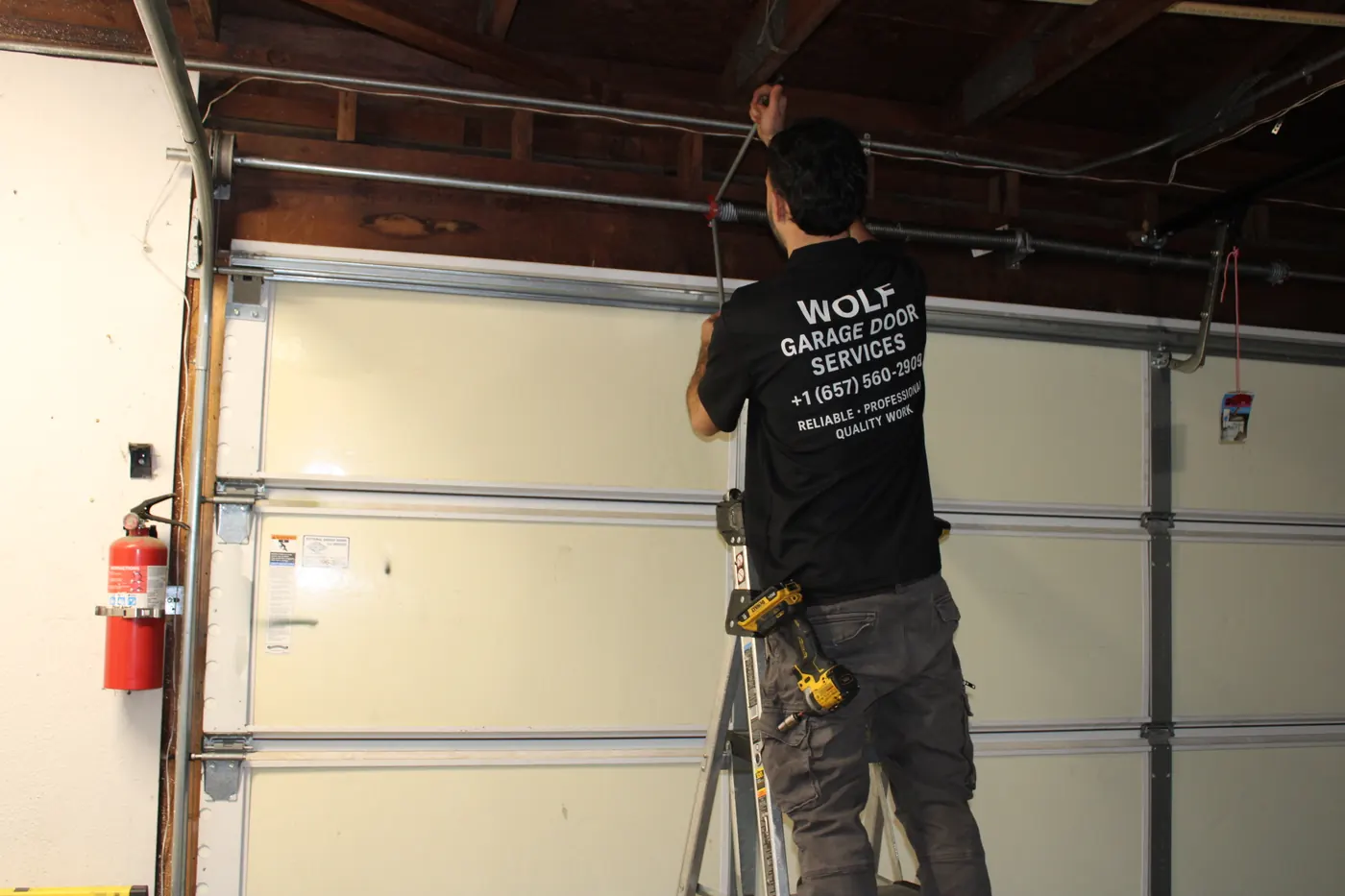
If the door feels heavy or rough when you pull the release and move it by hand, the opener is reacting to a mechanical problem:
- A weak or broken spring making the door heavier than normal
- A bent track or a roller binding at one spot
- A frayed cable or a door that sits crooked
- Something wedged in the track or under the bottom seal
These need hands-on work. Our technicians inspect the whole door before recommending a fix, so you'll know whether it's the opener or the springs before any work starts.
Door stuck open overnight? Wolf picks up the phone 24/7.
Frequently asked questions
Can I bypass the safety sensors?
No. Federal safety rules have required working entrapment protection on residential openers since the early 1990s, and bypassing it removes the one thing that stops the door on a child or pet. Fix the alignment or wiring instead.
Why does my door close fine when I hold the wall button?
Holding the wall button down overrides the sensors on many openers, which is a hint that the photo-eyes are the problem. Use it to get the door closed tonight, then align or clean the sensors.
The sensor lights are fine but it still reverses. What now?
Then the door is probably meeting resistance. Disconnect the opener with the release cord while the door is fully closed and lift it by hand. If it's heavy, jerky or crooked, the springs, rollers or tracks need attention.