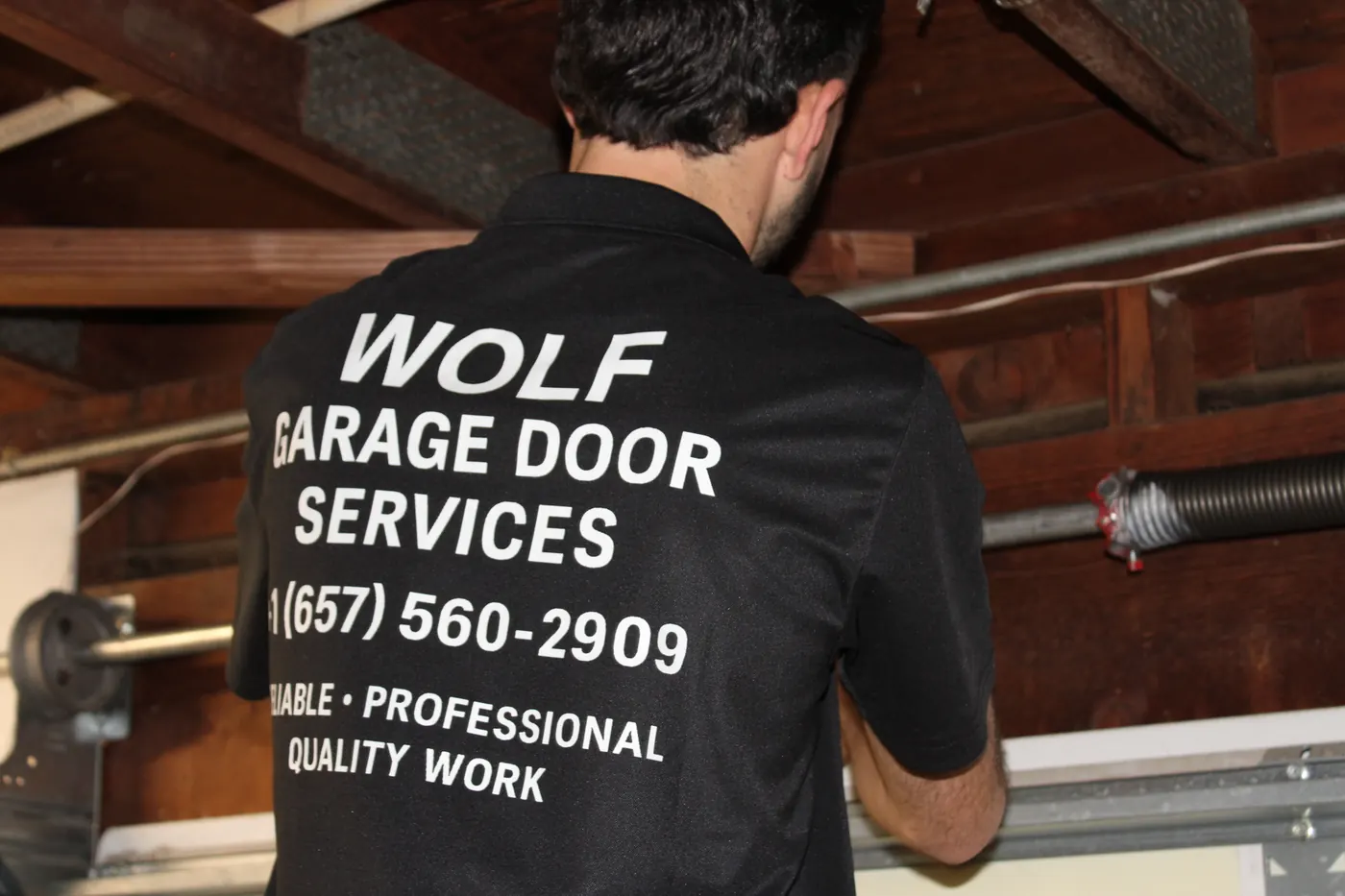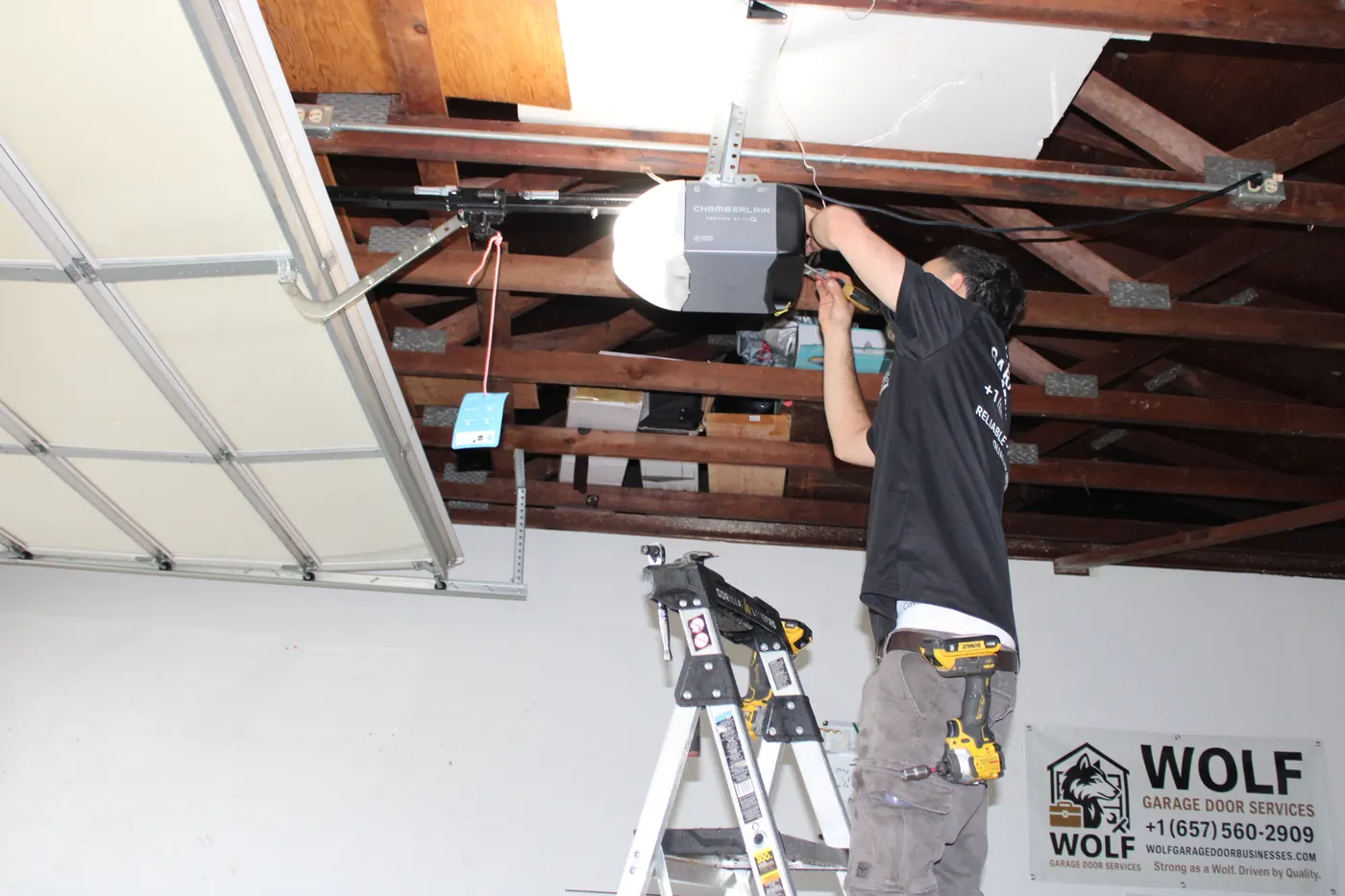
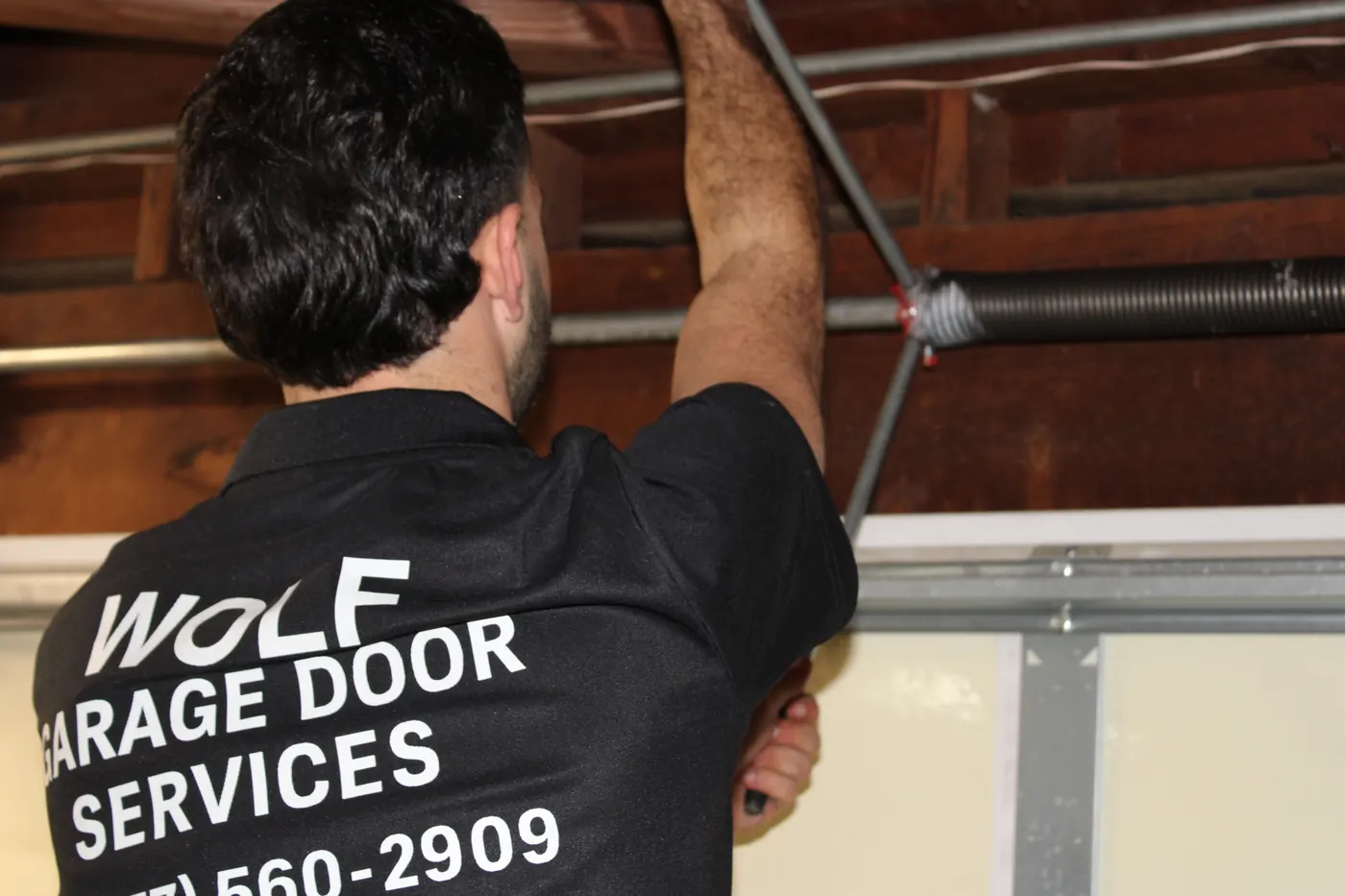
 Wolf Garage Door Services team
Torsion springs twist. Extension springs stretch. Both store energy when the door closes and give it back when it opens, so the door feels light in your hand.
Most newer Orange County homes have torsion springs. Plenty of older tract homes and rentals still run on extension springs, often original to the house.
How to tell which springs you have
Close the door and stand inside the garage facing it.
| Look for | Torsion | Extension |
|---|---|---|
| Location | On a metal shaft just above the door opening | Alongside each horizontal track, near the ceiling |
| Movement | Twists while the shaft turns | Stretches long when the door is down |
| Other parts | Cable drums at both ends of the shaft | Pulleys and a cable running through each spring |
| Count | One or two | Always a pair, one per side |
How torsion springs fail
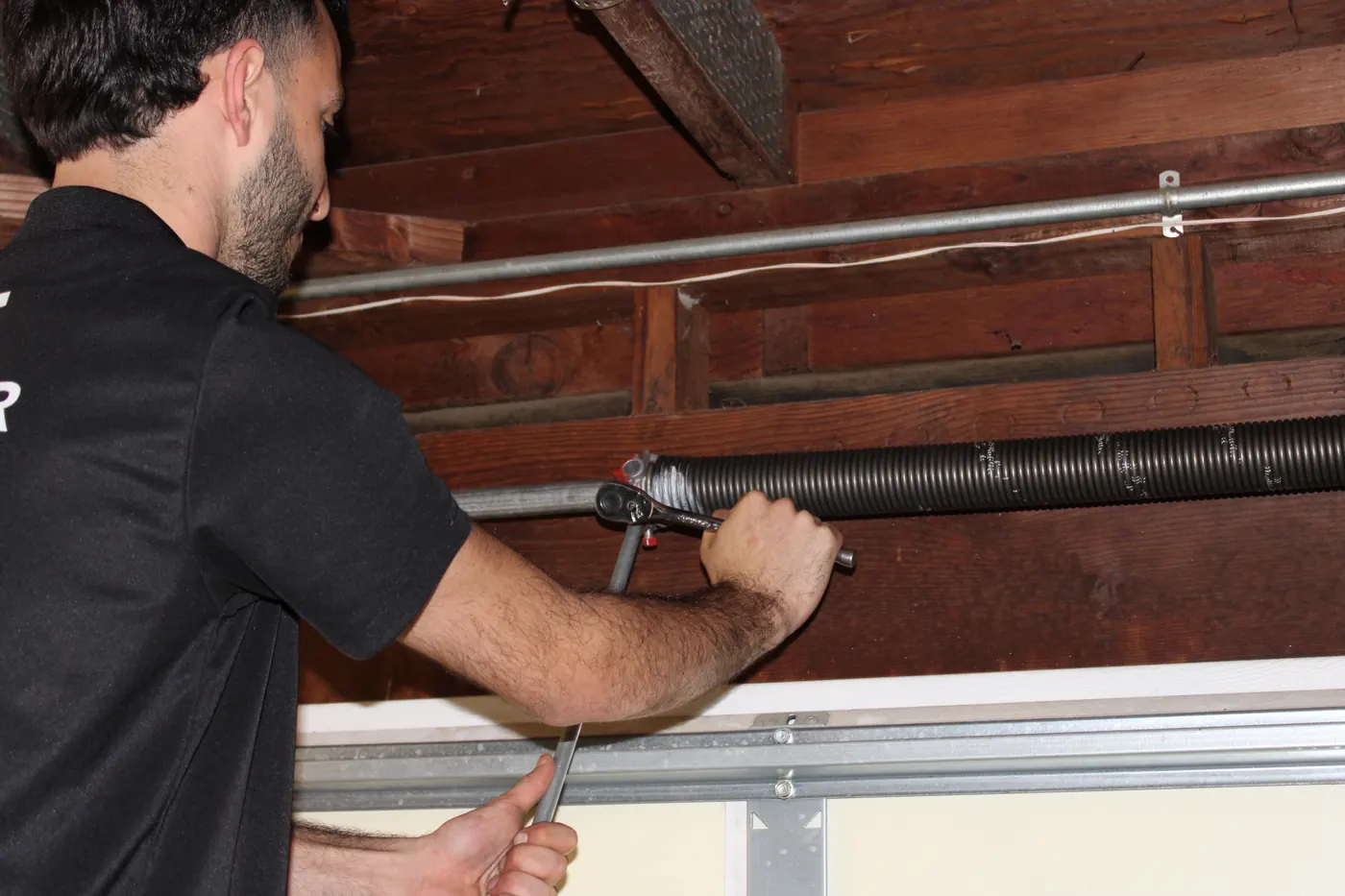
A torsion spring usually breaks in one clean spot, with a loud crack. Because it stays on the shaft, it doesn't fly across the garage. From then on the opener is trying to raise the full dead weight, and it usually can't.
Many standard torsion springs are rated around 10,000 cycles. One open and one close is a cycle, so a household that uses the door four times a day burns through about 1,500 a year.
How extension springs fail
Extension springs wear in a few ways that are easier to spot before they break:
- Coils that stay gapped when the door is open, meaning the steel has stretched out
- Rust patches or flaking along the coils
- One side of the door rising faster than the other
- Frayed cables or wobbling pulleys at the ends
When one finally snaps, the free end can whip with real force. That's why the next section matters.
Safety cables on extension springs
A safety (containment) cable is a thin steel line threaded through the center of each extension spring and anchored at both ends. If the spring breaks, the cable keeps the pieces from flying into a car, a window or a person.
Many older installs never had them. If you can look down the length of your extension spring and see no cable inside, have them added. It's a small part that prevents a serious injury.
Should you convert to torsion?
Converting means removing both extension springs, pulleys and cables, then mounting a torsion shaft, center bearing plate, drums and springs above the door. It's a bigger job than a straight spring swap.
- Worth it when: the door is heavy or insulated, you're replacing springs anyway, or you want quieter, steadier travel
- Maybe not when: there isn't enough headroom above the door for a shaft, or the door itself is near the end of its life
A technician can measure headroom and door weight on the spot and give you the options side by side. Start with our garage door spring repair page, or ask about a new door if the old one is worn out.
Estimates from Wolf are free, and the phone is answered 24/7.
Frequently asked questions
Are torsion springs safer than extension springs?
In normal use, yes. A broken torsion spring stays wrapped around its shaft, while a broken extension spring can whip loose if it has no safety cable. Both are dangerous to adjust, because both hold a lot of stored energy.
Can I replace just one extension spring?
It's better to replace them as a pair. Extension springs on the same door wear at the same rate, and mismatched tension makes the door lift crooked, which wears rollers and cables faster.
How much headroom do I need for torsion springs?
Standard torsion hardware needs roughly 12 inches of clear space above the top of the door opening. Low-headroom kits exist for tighter garages. A tech will measure before recommending a conversion.