 Wolf Garage Door Services team
Most residential doors in Orange County are sectional: four or five horizontal panels hinged together. That design is the reason a dent doesn't always mean a whole new door.
The right answer depends on three things: how bad the damage is, whether a matching section can still be ordered, and how much life the rest of the door has left.
First: cosmetic or structural?
A shallow dent in the middle of a panel is mostly a looks problem. Damage gets serious when it reaches the parts that hold the door together.
- Cosmetic: a small dent, the door still runs smoothly and closes flat
- Structural: a crease across the panel, a bent end stile, a cracked hinge mount, or a section bowed inward
- Urgent: the door binds, rubs the track, or one roller has popped out
If the door is binding, stop using it. A bent section can twist the whole door and strain the springs and opener.
When a single section can be swapped
Replacing one section works well when the door is in good shape overall and the manufacturer still makes that model, size, color and panel pattern. The tech removes the damaged section, moves the hinges and rollers or fits new ones, and re-balances the door because the weight may change slightly.
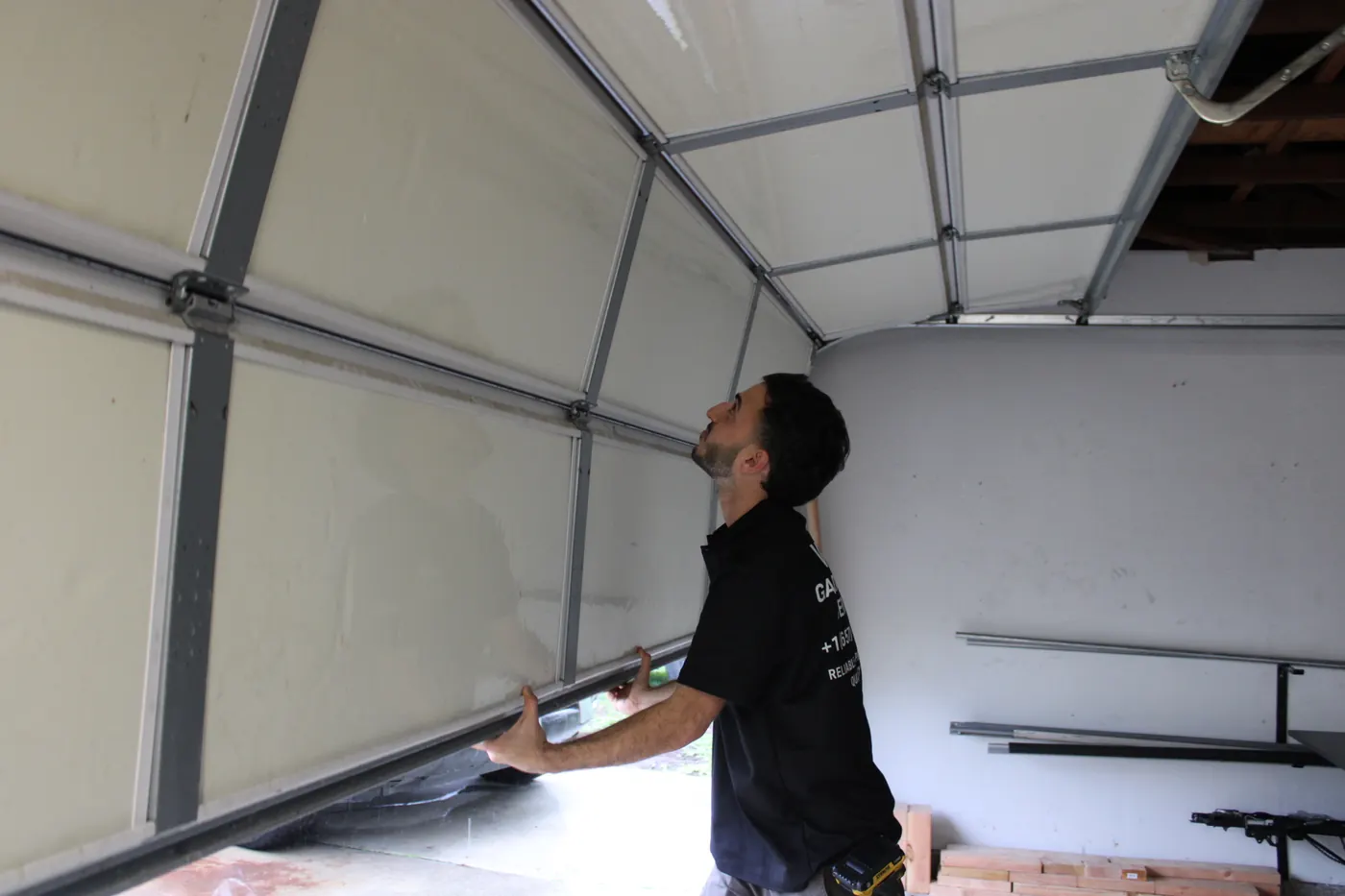
Details on that process are on our panel replacement page.
Matching an older or discontinued door
This is where a simple panel job can get complicated. Manufacturers retire designs, change embossing patterns and shift paint shades. A door that has been in the sun for years has also faded, so even a correct new section can look brighter than the rest.
- Find the model label, typically stuck to an end stile or the back of a panel, and take a photo of it.
- Measure the section height and the door width.
- Note the panel style (raised, flush, carriage) and window layout.
- Expect that an exact color match may need painting the whole door.
In HOA communities, check whether the association has rules on door style and color before choosing a new section or a new door.
Insulated vs. non-insulated sections
| Non-insulated (single steel) | Insulated (steel with foam core) | |
|---|---|---|
| Dent resistance | Lower: thin steel dents easily | Higher: foam backing supports the skin |
| Weight | Lighter | Heavier |
| Mixing with the other type | Changes door balance | Changes door balance |
Sections should match the rest of the door. Swapping a single steel panel for an insulated one (or the reverse) changes the weight and the look, and the springs may need adjusting.
When a full door makes more sense
- Two or more sections are damaged
- The model is discontinued and no close match exists
- The door is old, rusted along the bottom, or already has other repairs
- You wanted an insulated door, new style or windows anyway
A technician can compare both options on one visit. Estimates are free, and you see the prices for a section swap and a new door side by side before deciding.
Frequently asked questions
Can a dent in a garage door be popped out?
Small, shallow dents in thin steel can sometimes be pushed out from the back, but the steel often stays stretched and wavy. Creases and dents near the edges or hinges usually don't come out cleanly.
Will a new section match my old door?
If the model is still made, the shape will match. The color may not, because the old sections have weathered. Some homeowners repaint the whole door afterward for an even finish.
Can I keep using a door that has a dent in it?
If the door opens and closes smoothly and evenly, a cosmetic dent is not a safety issue. If it rubs, binds, or a roller has come out of the track, stop using it until it has been checked.