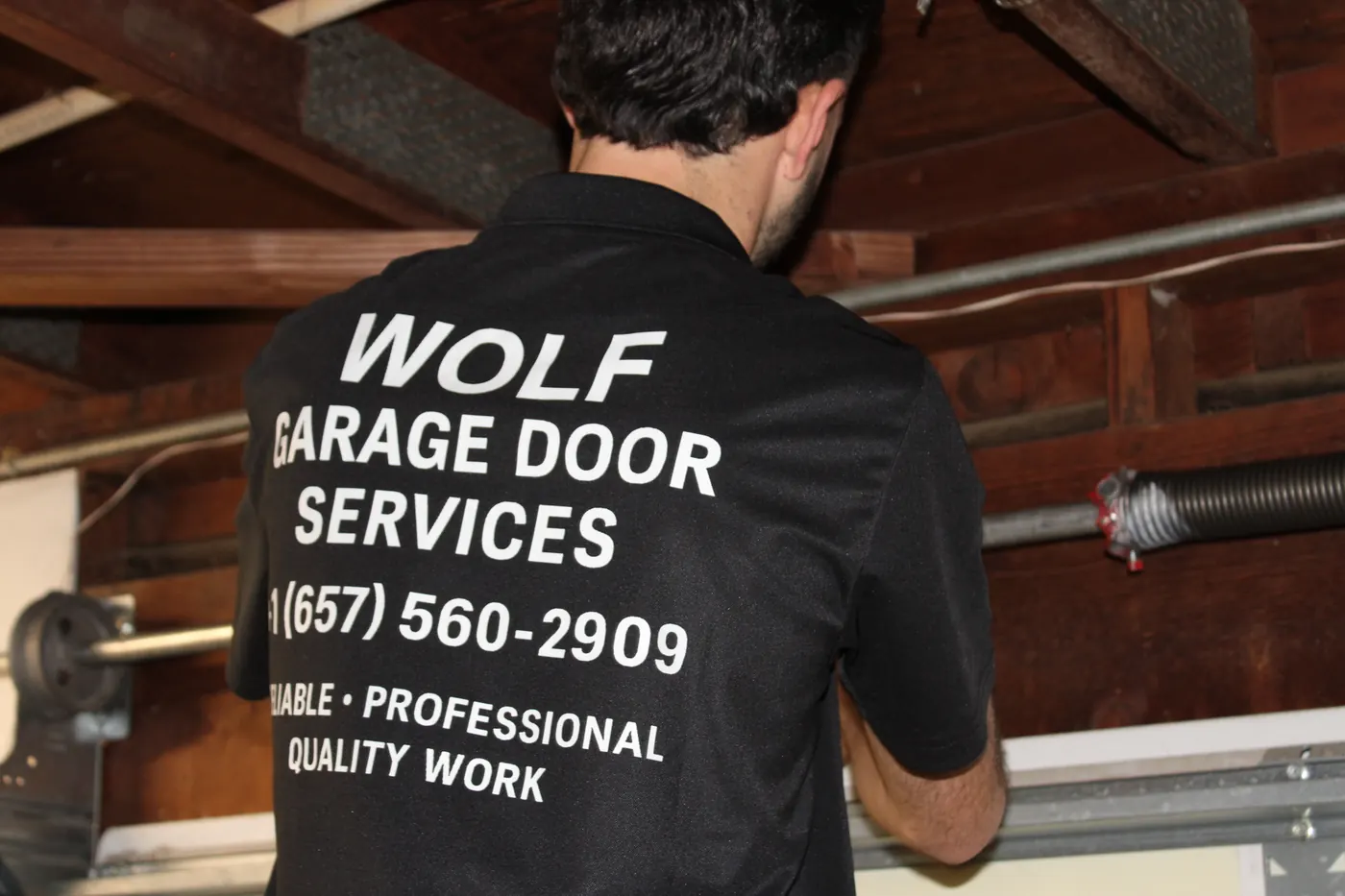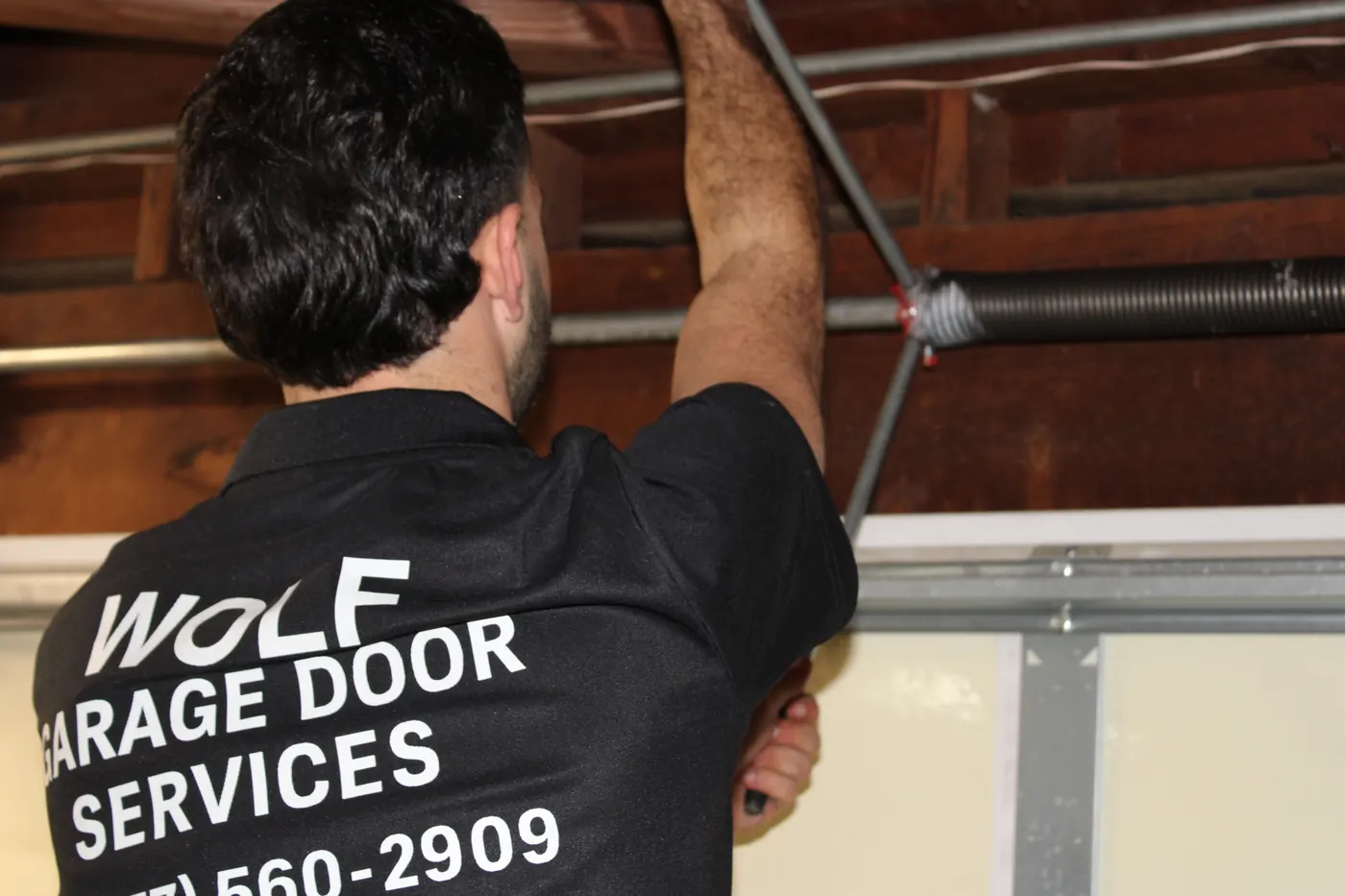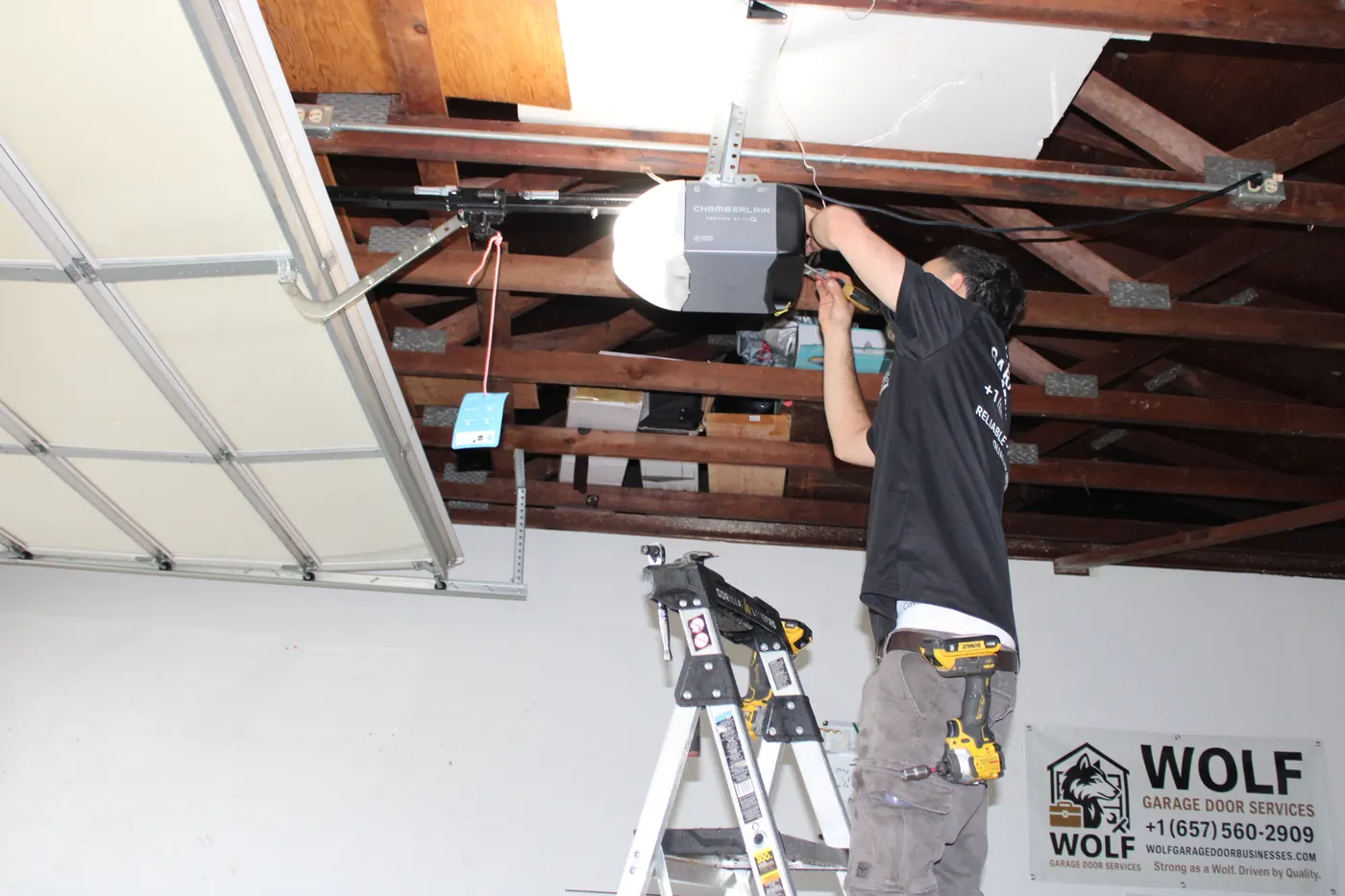
 Wolf Garage Door Services team
Garage door cables are thin braided steel lines that are anchored at the two lower brackets and climb to drums on the spring shaft (or to pulleys on extension-spring doors). They carry the door's weight every time it moves, and they wear out quietly until the day one lets go.
This guide covers the warning signs, why a single bad cable throws the whole door out of level, and what a proper replacement looks like.
Signs a cable is wearing out
Look at the cable where it leaves the bottom bracket and where it wraps the drum. Those two spots take the most strain. With the door closed, check for:
- Broken strands sticking out like whiskers along the line
- Rust or a reddish-brown stain on the wire, common on homes near the water where salt air reaches the garage
- Slack on one side while the other side is tight
- Uneven gaps under the door when it is shut
- A cable that has jumped off the drum and is tangled around the shaft
Any one of these means the cable is close to failing. Don't run the door to "see if it holds."
Why the door hangs on one side
Each side of the door has its own cable, and both are meant to lift at exactly the same rate. When one snaps or slips off its drum, that side loses support while the other keeps pulling. The result is a door that tilts, binds in the track, and sometimes twists a section or pops a roller out.
A loose cable is often a symptom rather than the root cause. A broken torsion spring, a bent bottom bracket or a roller that caught in the track can all let a cable go slack and unwind.
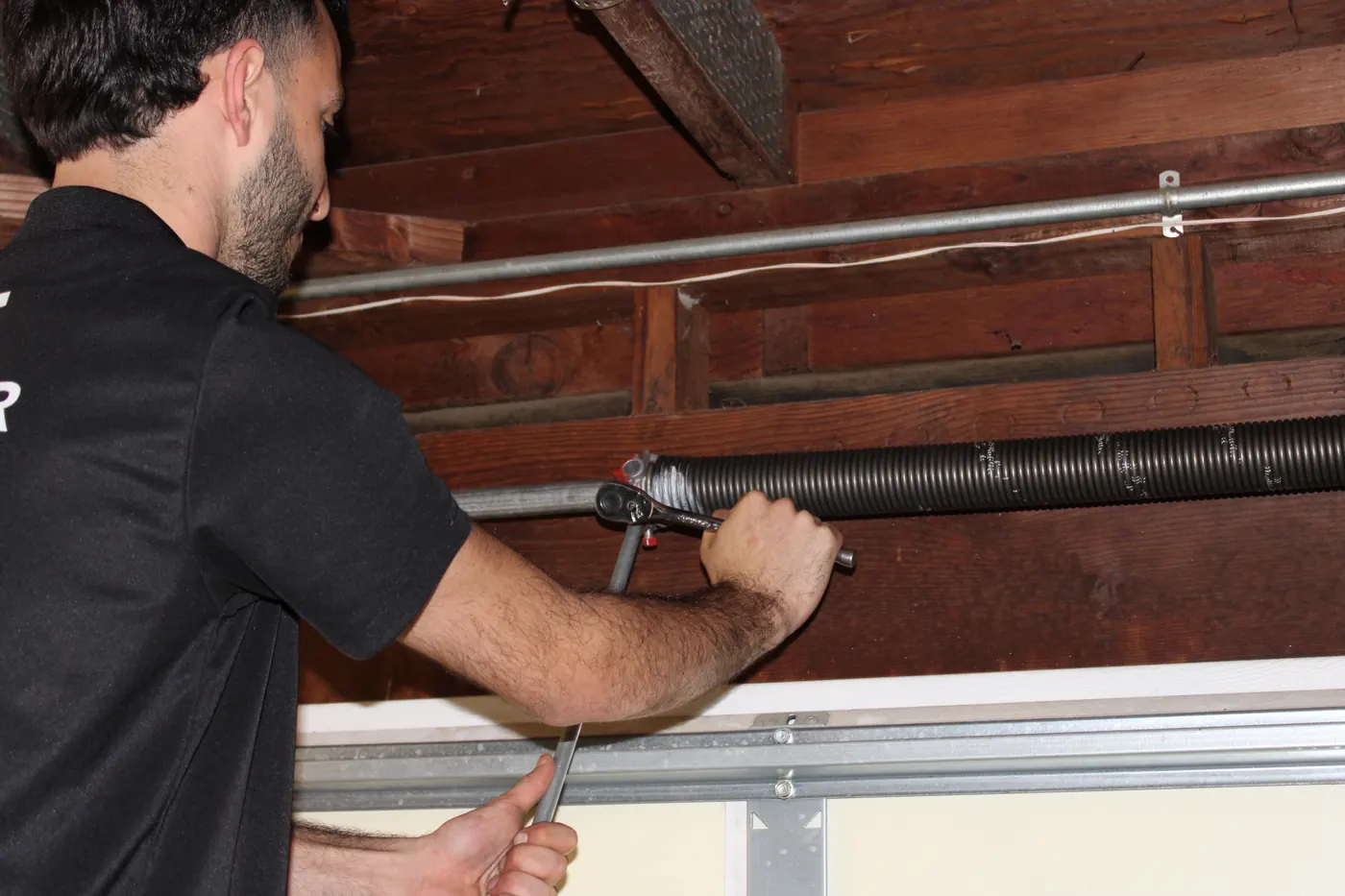
Why cables and drums are a technician job
Cables are held tight by the springs. Loosening a set screw on a drum, or pulling a cable off its bracket, can release that tension all at once. The tools fly and the door can drop.
Replacing a cable on a torsion system means unwinding the spring first, swapping the line, re-seating it on the drum with the correct number of wraps, and then winding the spring back to the right tension. Get any step wrong and the door lifts unevenly or slams shut.
What a cable replacement involves
- Secure the door so it can't move, usually clamped in the track.
- Unwind the torsion spring and lock the shaft.
- Remove both cables, even if only one failed, so the pair matches in length and wear.
- Inspect the drums for grooves or cracks and the bottom brackets for bends or rust.
- Install the new cables, wind the springs, and level the door.
- Run the door through several full cycles and check the balance by hand.
Our technicians look over the whole door before quoting, so you hear about a tired spring or worn rollers before any work starts, not after. More on the service itself is on our cable replacement page.
What to do until help arrives
- Stop using the opener. It can bend the door trying to force it.
- Keep people and pets clear of the opening.
- If the door is stuck open and you need it secured, call us. The phones are answered 24/7.
Frequently asked questions
Can I drive the car out if one cable is broken?
Only if the door is already fully open and stable. Don't try to raise a door that is hanging on one cable. The remaining side carries all of the weight and can fail or bend the track, trapping the car anyway.
Should both cables be replaced at the same time?
Usually yes. Both cables went through the same number of cycles and the same weather. A new cable paired with an old one stretches at a different rate, which pulls the door out of level again.
What makes garage door cables fail?
Normal wear from years of lifting, rust from moisture and salt air, a drum with a sharp groove that chews the strands, or a spring problem that let the cable go slack and jump off the drum.
Is the estimate free?
Yes. Estimates are free, and you get the options and the price before any work begins.