 Wolf Garage Door Services team
A healthy sectional door makes a low, even rumble from start to stop. Anything sharper, louder or uneven is the door telling you that a part is dry, loose, worn or broken.
Here is a sound-by-sound guide, from harmless to urgent.
Quick guide: sound, cause, urgency
| Sound | Usual cause | How urgent |
|---|---|---|
| Squeal or squeak | Dry hinges, rollers or spring coils | Low: lubricate soon |
| Grinding | Worn roller bearings or a dragging opener gear | Medium |
| Rattling | Loose track bolts, hinge screws or chain slack | Medium |
| Popping or snapping while moving | Spring coils binding, or a roller jumping in a bent track | High |
| One loud bang, door idle | Torsion spring broke | Stop using the door |
Squealing and grinding
A squeal usually comes from metal rubbing on metal: hinge pins, roller stems or the spring coils. A light coat of garage door lubricant (not grease, which collects grit) on hinges, roller bearings and the spring often quiets it in one pass. Leave the tracks dry; they only need wiping.
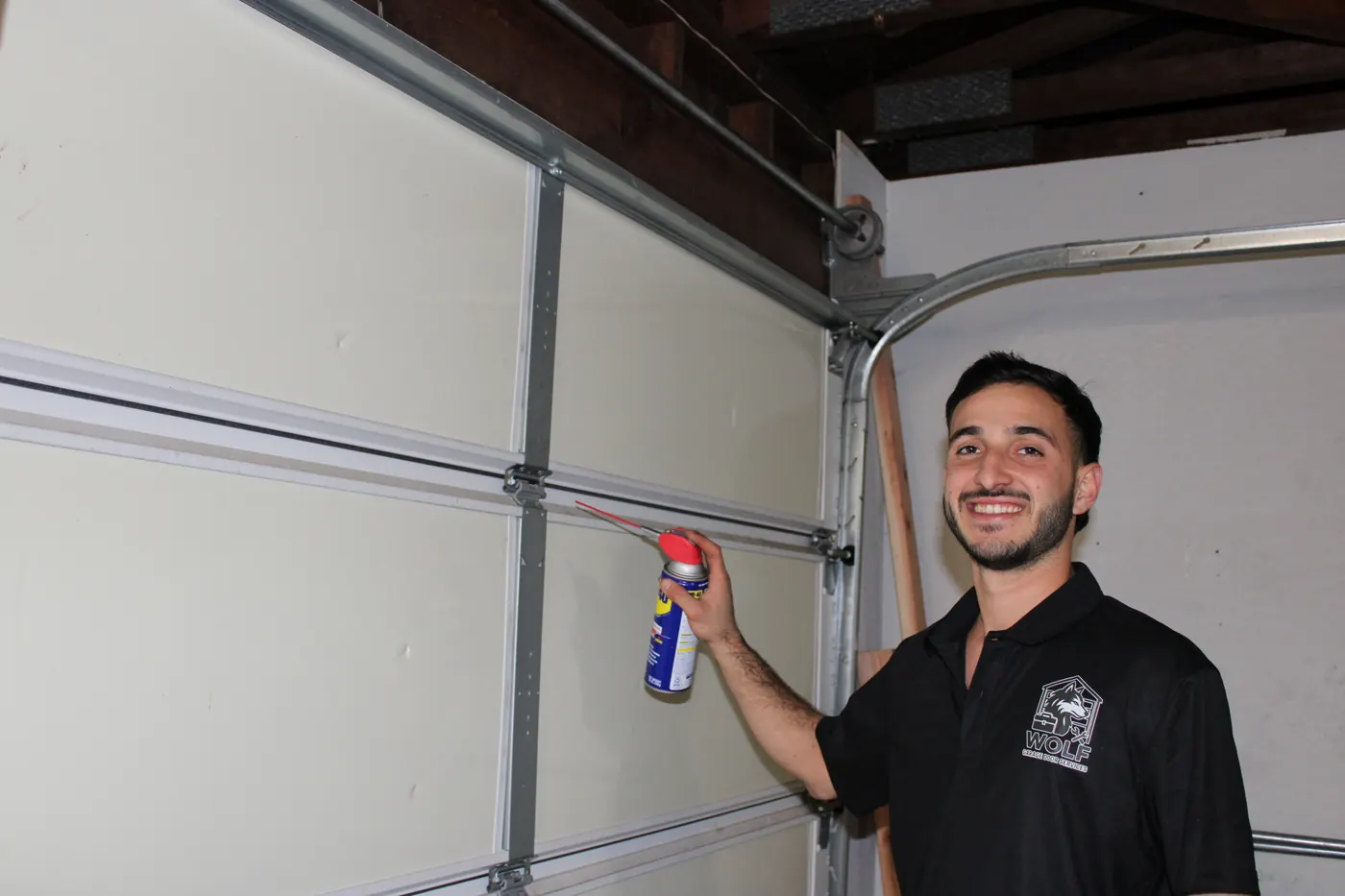
Grinding is different. It often means the bearings inside a roller have worn out and the wheel is dragging instead of spinning. Older steel rollers without sealed bearings are common culprits. If spraying them doesn't help, the rollers need replacing. Our roller replacement page covers the options.
Rattling and vibration
Every cycle shakes the hardware a little. Over time, track brackets, hinge screws and opener mounts work loose. You can tighten hinge screws and track-to-wall lag bolts with a socket wrench.
The bottom brackets, where the cables attach, are under spring tension. Their bolts are often painted red as a warning. Never loosen them.
On a chain-drive opener, a slapping rattle can mean the chain has stretched and needs adjusting. A metallic clatter at the top of the travel, on the other hand, often comes from the door hitting a loose stop bolt or a track end that has shifted. Watch the door through a full cycle and note where the sound starts; that narrows it down quickly.
Popping, snapping and a single bang
A popping sound while the door moves can come from a spring that is binding as it winds, a cable slipping on its drum, or a roller hopping over a dent in the track. These are worth a professional look soon.
A single loud bang from the garage when nobody is using the door is the classic sign of a torsion spring breaking. Look above the door for a gap in the coil. If you see one:
- Don't use the opener. It can strip its gear or bend the door trying to lift the full weight.
- Don't pull the emergency release if the door is open.
- Book a spring repair. On a two-spring door, both are usually replaced together.
Keeping it quiet
Near the coast, salt air rusts hinges and roller stems faster, so they dry out and get noisy sooner. Inland, dust and heat do the same to the opener. A periodic maintenance visit covers lubrication, tightening and a balance check. If something bigger turns up, you get the options and the price first.
Frequently asked questions
Will a quick shot of WD-40 stop the squeaking?
Regular WD-40 is mostly a cleaner and evaporates quickly, so the squeak comes back. Use a lubricant labeled for garage doors, such as a silicone or lithium spray, on hinges, rollers and springs.
Why is my garage door louder in the morning?
Cold, damp air can stiffen lubricant and make metal parts contract slightly. If the noise fades once the door has run a cycle or two, it is usually dry hardware rather than a failing part.
Are nylon rollers quieter than steel?
Generally yes. Nylon rollers with sealed bearings run more quietly than bare steel ones and don't need as much lubrication. They are a common upgrade when worn rollers are replaced.