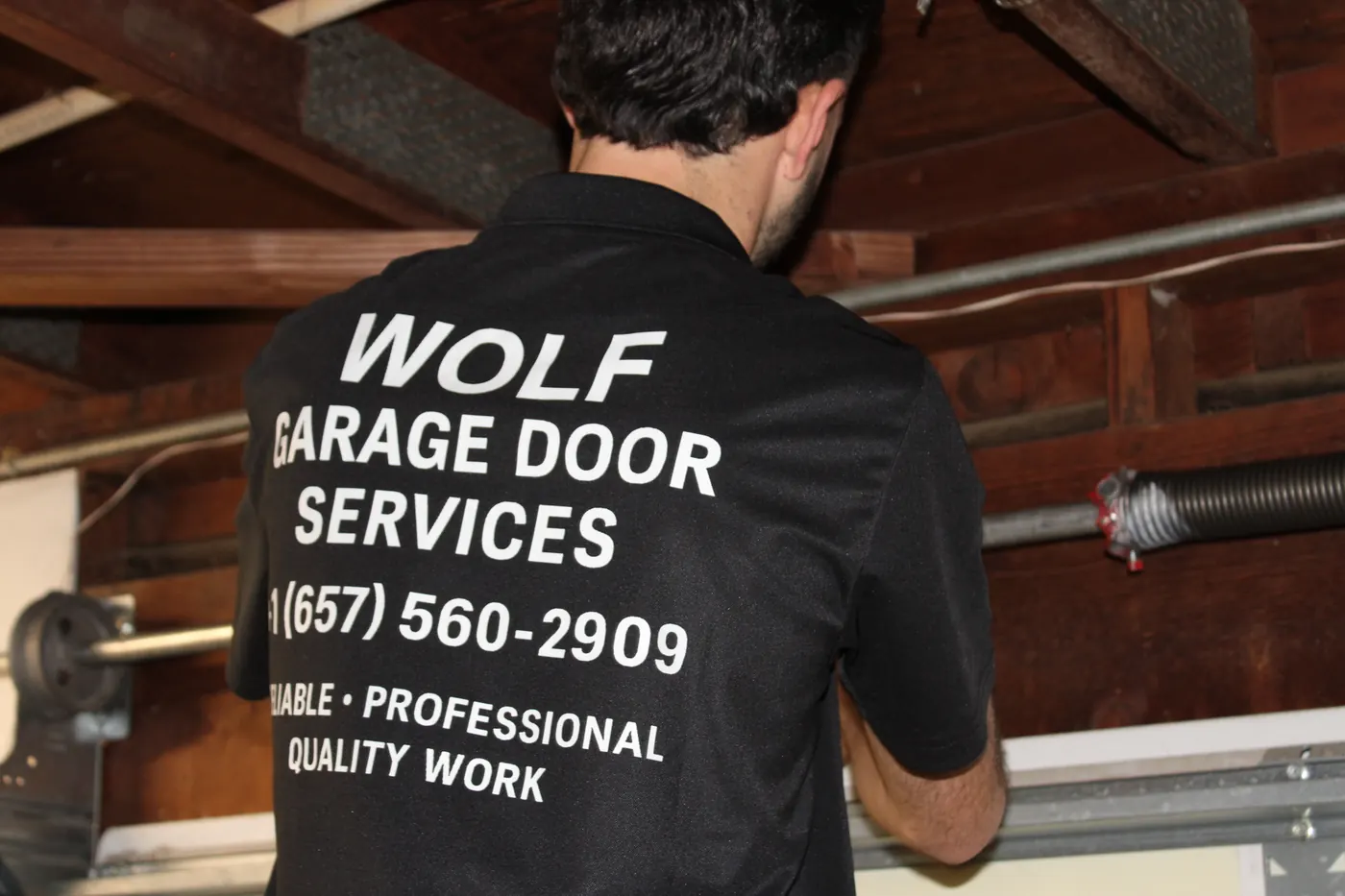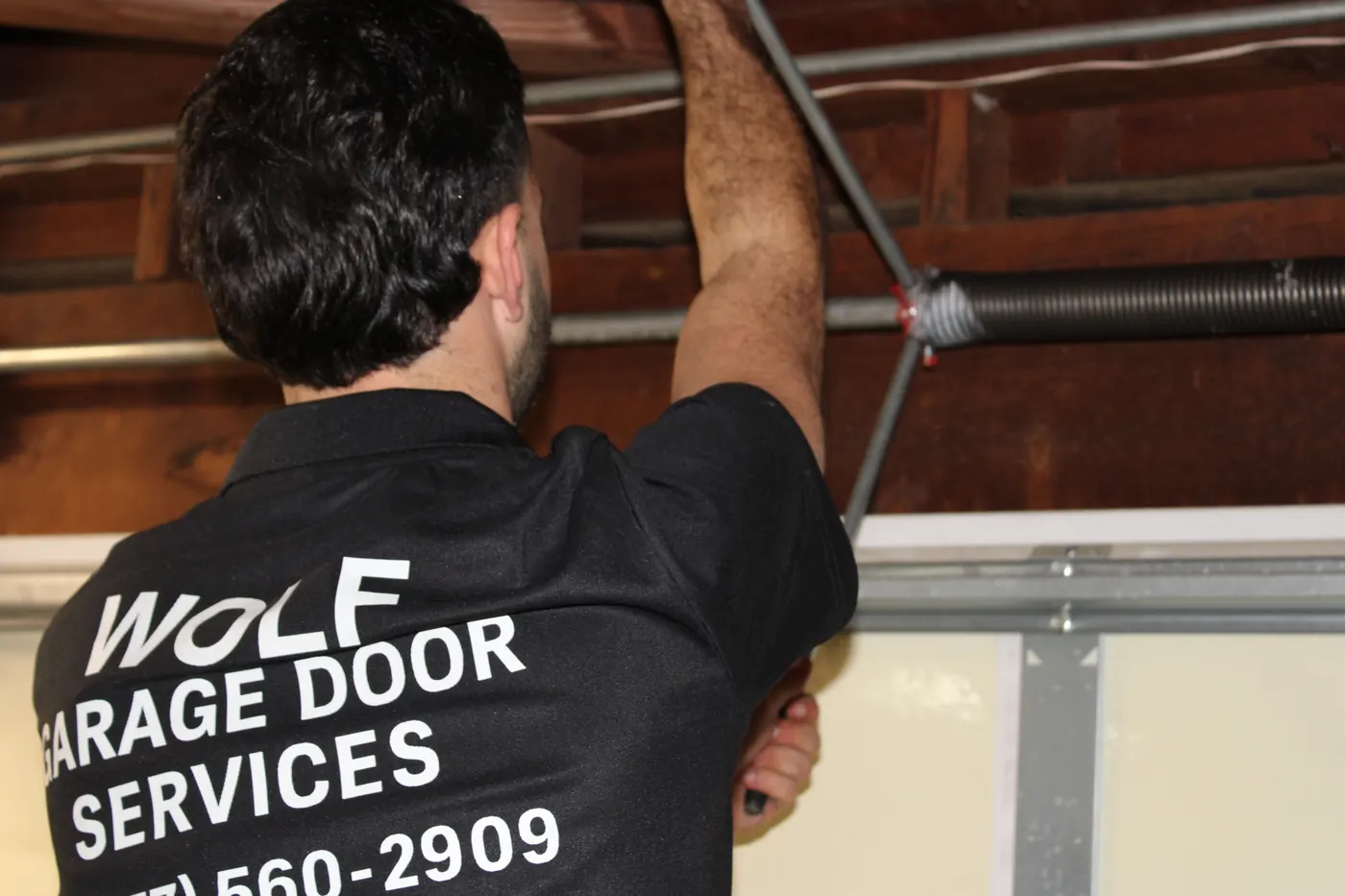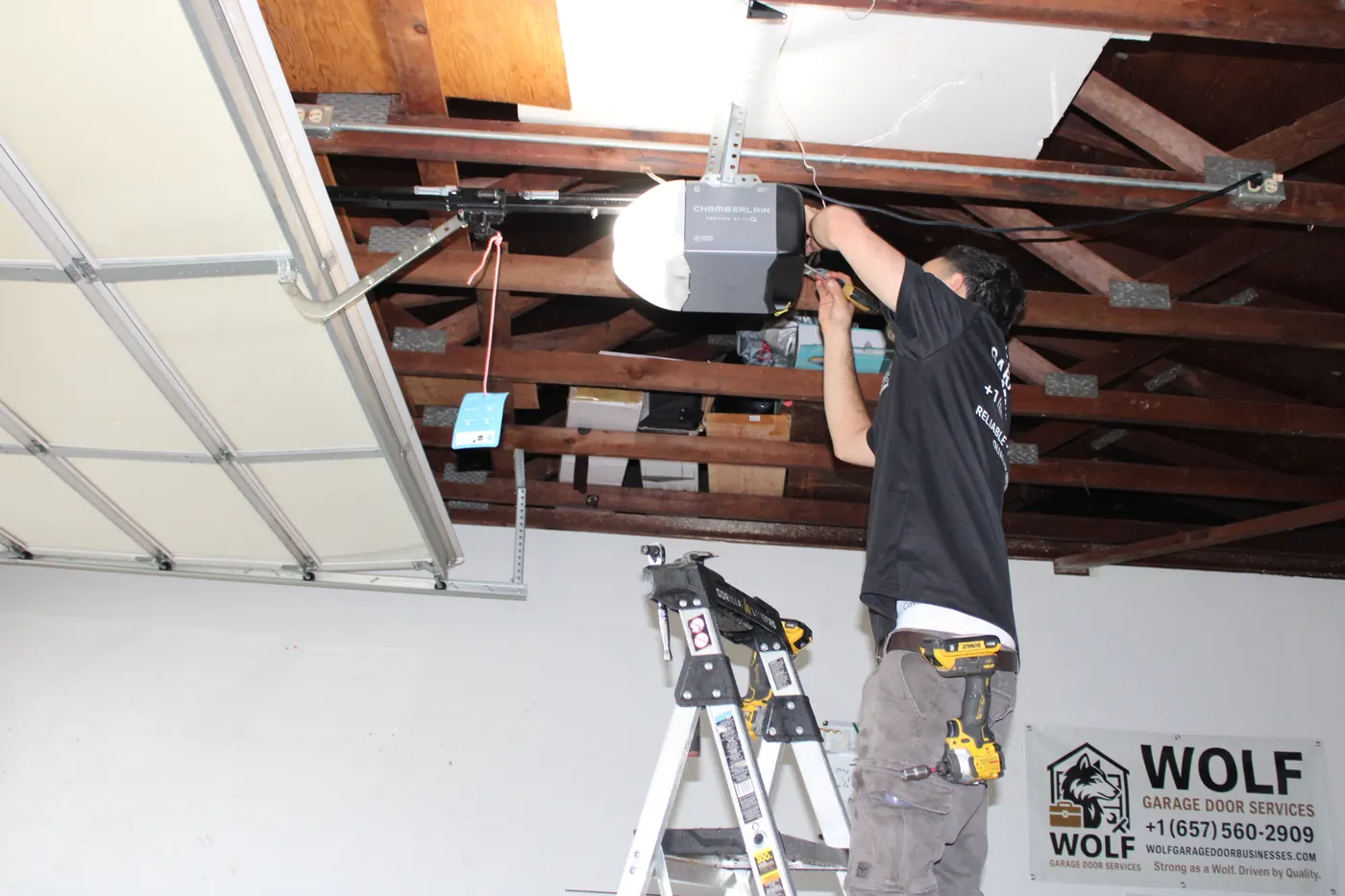
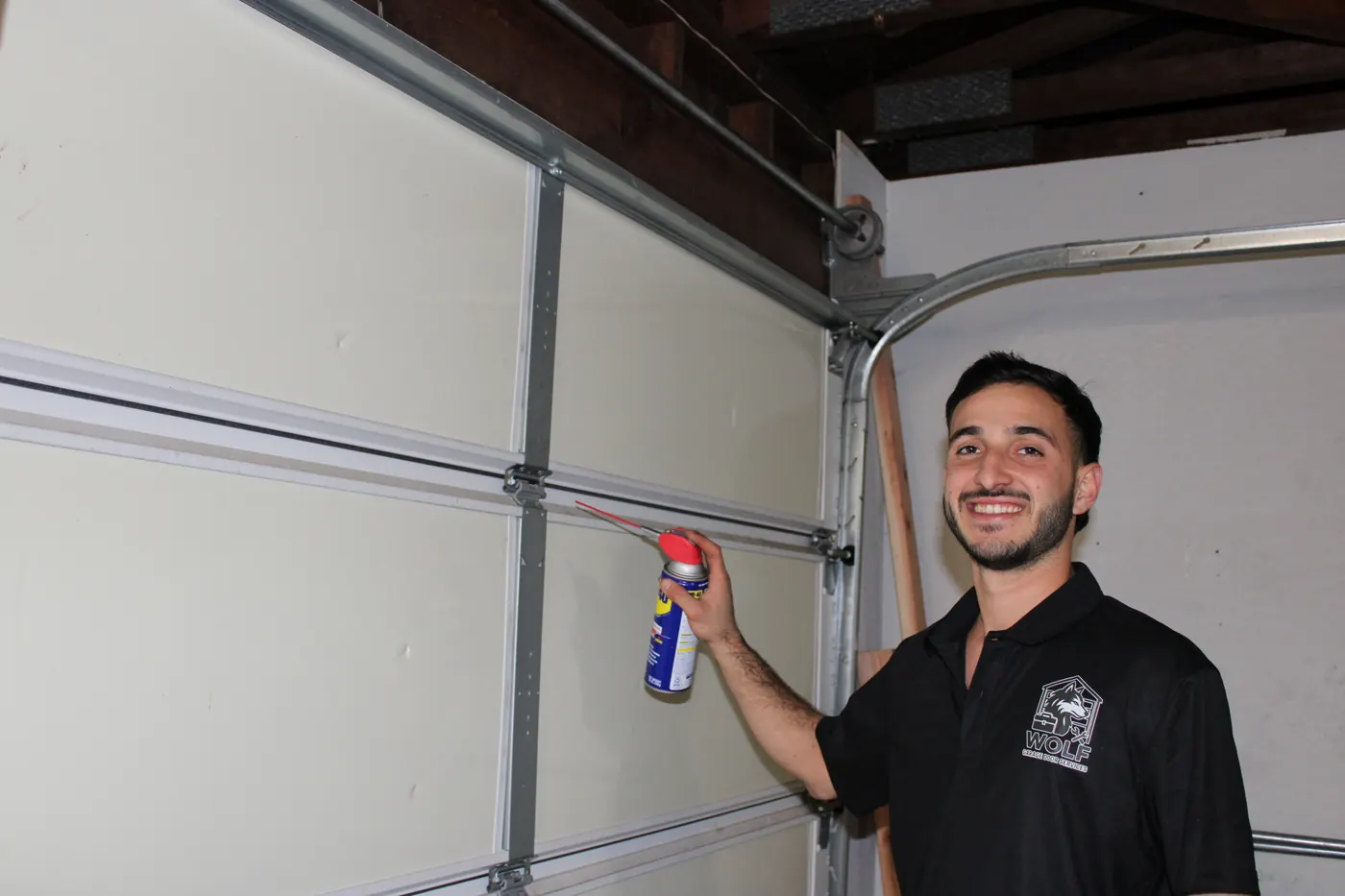
 Wolf Garage Door Services team
Moist marine air carries fine salt that settles on every steel part of a garage door. Each foggy morning dampens it again, and the rust keeps working. Beach sand tracked in on bikes and boards adds grit to the rollers and tracks.
A little routine care goes a long way. Here's what salt attacks, what you can safely do yourself each season, and where to stop.
What salt air does to each part
| Part | What you'll notice |
|---|---|
| Torsion or extension springs | Orange rust on the coils, squeaking, a door that feels heavier; rust shortens spring life |
| Steel rollers | Bearings seize, rollers drag or slide instead of spin, grinding noise |
| Hinges and track bolts | Rust streaks, loose bolts, hinges that crack at the knuckle |
| Cables | Rust and broken strands near the bottom brackets |
| Bottom seal | Rubber hardens and cracks, letting in sand, water and pests |
Seasonal checklist you can do yourself
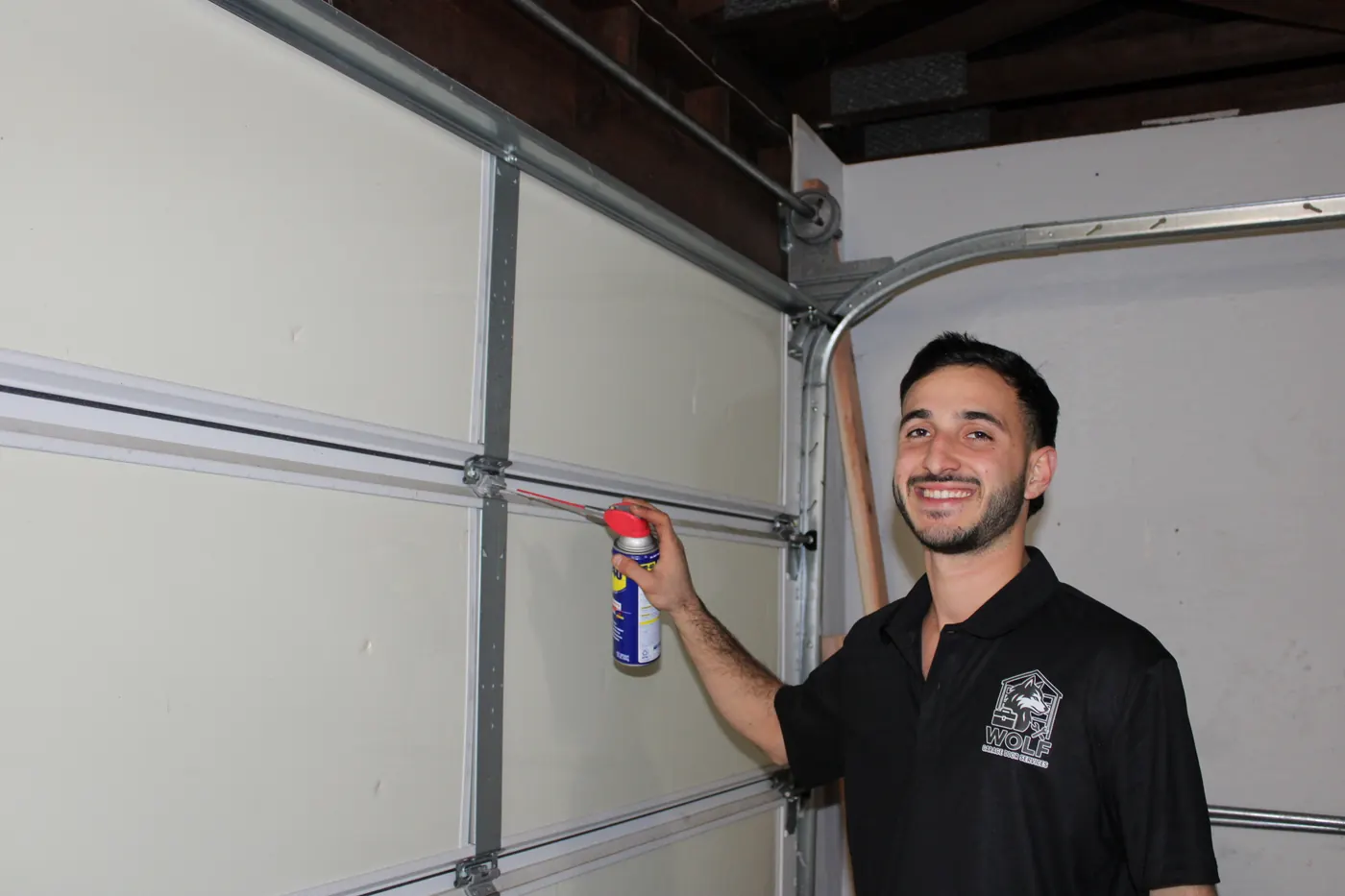
Do this every three months near the coast, or twice a year inland. Close the door and unplug the opener first.
- Rinse and wipe. Wipe the tracks, hinges and door face with a damp cloth to lift salt film and sand. Dry them afterward.
- Lubricate. Spray hinge pivots, roller bearings and the spring coils with a lubricant made for garage doors. Skip the tracks; grease there collects sand.
- Look closely. Check springs for rust or gaps, cables for broken strands, and rollers for cracks or wobble.
- Check the seal. Press the bottom rubber; if it's stiff, cracked or leaves daylight, it's time for a new one.
- Test balance. Plug the opener back in, pull the release with the door closed, and lift the door halfway by hand. It should stay put.
- Test the safety reverse. Close the door on a flat 2x4. It should reverse on contact.
What to leave to a technician
Springs, cables, cable drums and the bottom brackets are all under heavy tension. Don't loosen, adjust or replace them yourself, even if the rust looks like an easy fix.
- Rusted or gapped springs
- Frayed or rusted lift cables
- Seized rollers that need to come out of the track
- A door that drifts down or shoots up during the balance test
Upgrades that hold up better near the beach
When parts need replacing anyway, a few choices slow the next round of rust:
- Nylon rollers with sealed bearings instead of bare steel wheels
- Galvanized or coated springs where available
- Stainless or galvanized hardware for hinges and track bolts
- A fresh vinyl bottom seal and side weatherstrip to block blowing sand
A professional garage door tune-up covers the tension parts and the balance, and spots what's close to failing. Worn wheels can be swapped during the same visit through our roller replacement service.
Estimates are free, and you can reach Wolf by phone 24/7.
Frequently asked questions
How often should a garage door near the beach be serviced?
Homeowner care every three months helps a lot near the water. A professional tune-up once a year lets a technician check spring tension, cables and balance, which you shouldn't adjust yourself.
Is WD-40 enough for a squeaky door?
Standard WD-40 cleans and displaces water, but it isn't a lasting lubricant. It's fine for loosening grime. After cleaning, finish with a proper garage-door lubricant on the moving metal parts.
Does inland Orange County need the same care?
Less salt, but more heat and sun. Inland, the bottom seal and opener tend to wear first, and paint fades faster. A twice-a-year check covers most homes away from the coast.
Is rust on my springs dangerous?
It's a warning sign. Rust pits the steel and makes the spring more likely to snap without notice. Have a technician look at it rather than wire-brushing a loaded spring yourself.